

Fun Facts: Fontana
- During World War II, Henry J. Kaiser’s steel mill (which built steel plates for military ships) became a major employer, driving the area’s industrial identity. Kaiser also established a hospital for the Fontana Steel Mill’s workers, from which sprang the now-massive Kaiser Permanente hospital chain and healthcare plan.
- The arrival of the San Bernardino Freeway opened new pathways for Fontana’s suburban growth and connection to the rest of Southern California. But it also spelled decline for numerous small motels lining Foothill Blvd., aka Route 66. The high cost of neon signage means that vintage, budget motels with interesting names like "40 Winks" and "Cheryo" now often cater to long-term residents and sport simple, workaday signage. There is still some architectural interest to be found - such as the 1940s flagstone-covered Rose Motel, the bungalow-style Dragon Motel, or the mid-century modern Sand and Sage.
- Fontana's civic core is centered on Sierra Avenue just a few blocks south of Route 66. In addition to City Hall, this area bordering the former Pacific Electric streetcar line (now Pacific Electric Trail) features an impressive library and auditorium, a park with outdoor amphitheater and veterans memorial, the Fontana Memorial Rose Garden, and the historic, restored Art Deco styled Fontana Theater, now known as Stage Red.
For more information:
POINTS OF INTEREST
- Rose Motel
- 17829 Foothill Blvd.
- Stage Red (formerly Fontana Theater)
- 8463 Sierra Ave.
- Dragon Motel
- 16564 Foothill Blvd.
- Sand and Sage Motel
- 16364 Foothill Blvd.
- Fontana Inn
- 15706 Foothill Blvd.
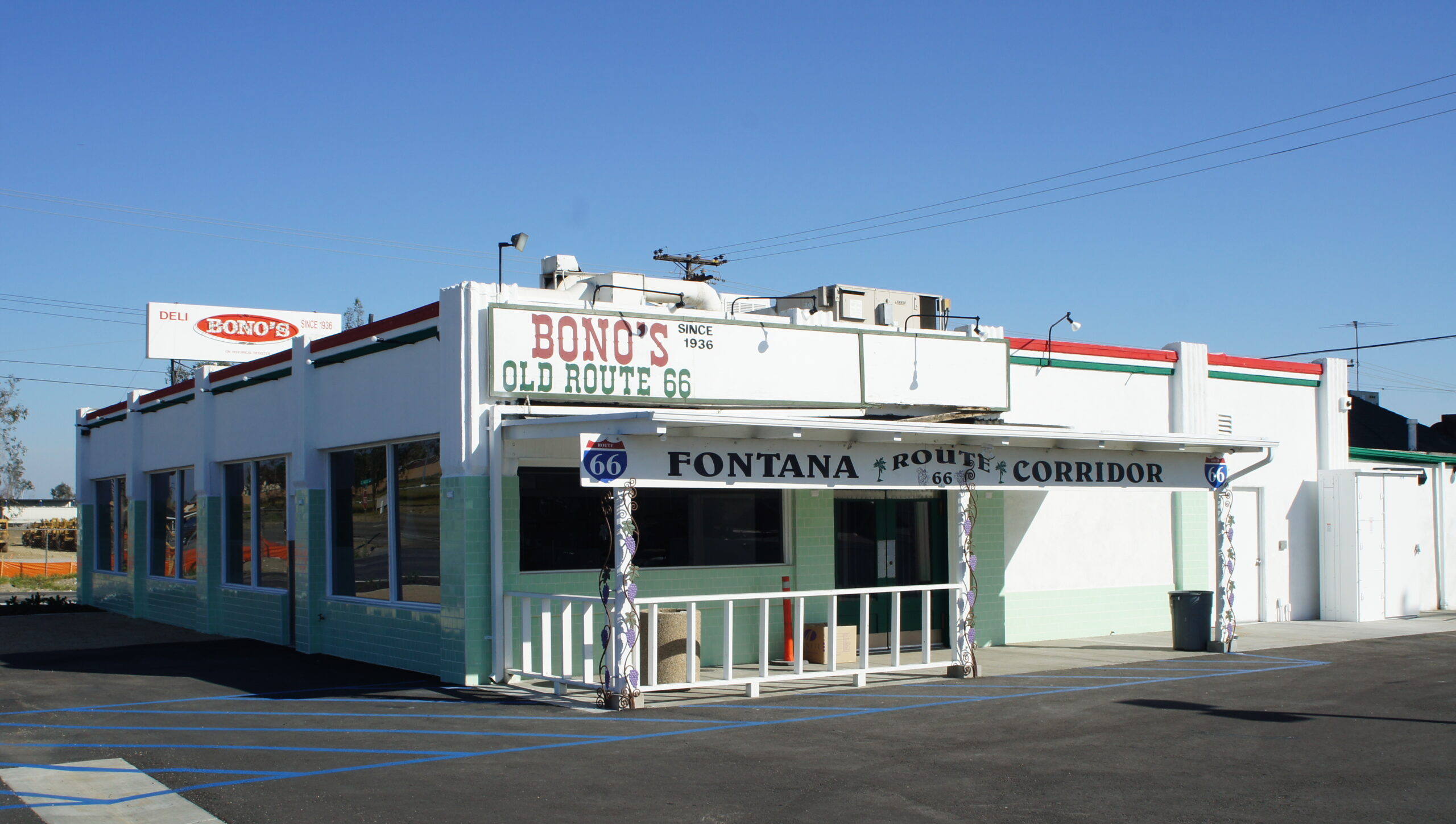
- Peruvian Restaurant Route 66 (formerly Bono's)
- 15395 Foothill Blvd.
- Mancave Collectibles (vintage Texaco)
- 15305 Foothill Blvd.